Blog
Notes, op-eds, and field reports
Syntheses, lessons from the field, takes. On substance, on method, on what AI-assisted research changes — and what it does not.
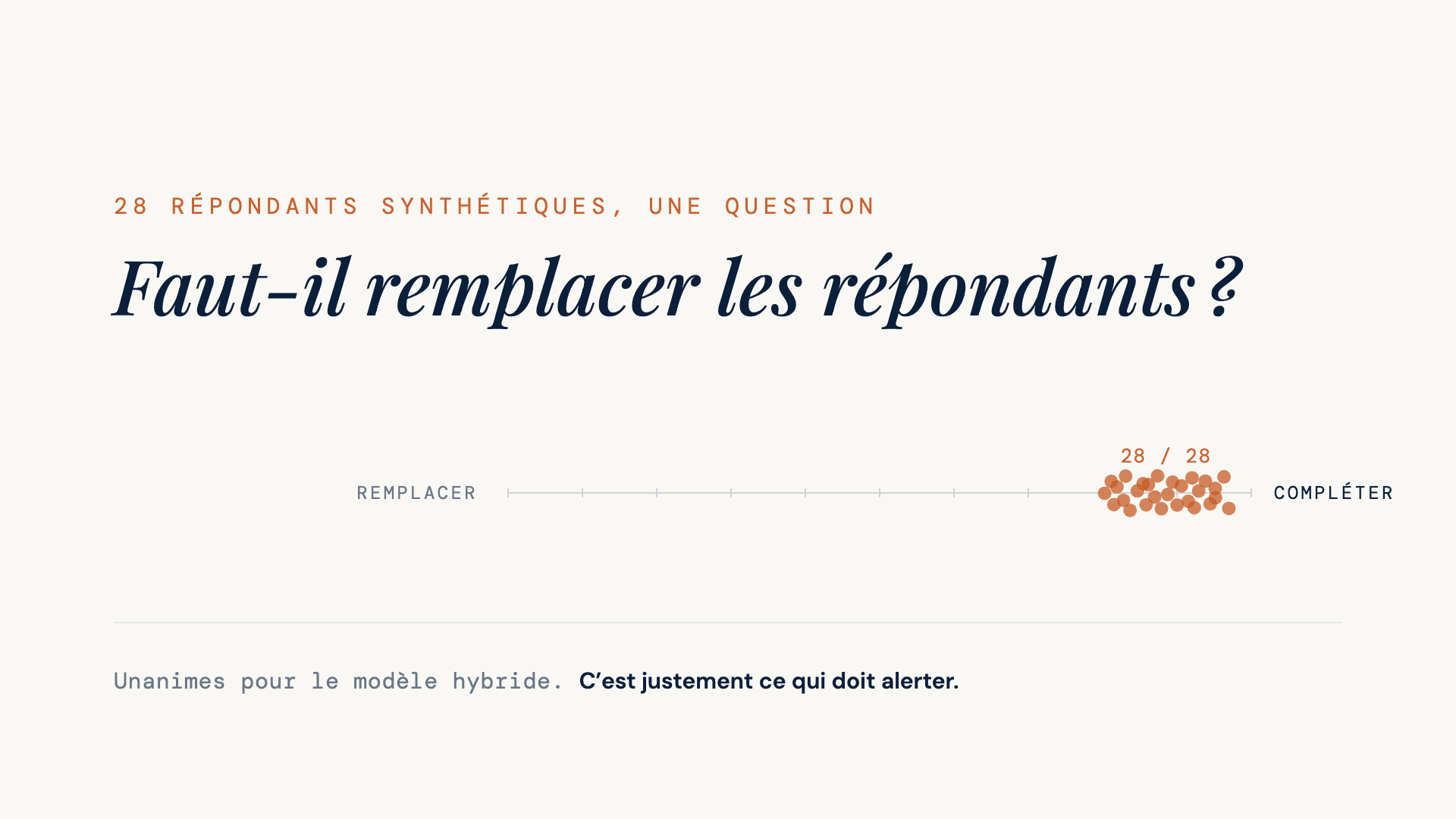
Personas synthétiques : peuvent-ils remplacer les répondants ? Je leur ai posé la question
J’ai interrogé vingt-huit répondants synthétiques sur leur propre remplacement. Leur réponse unanime est instructive — et cette unanimité l’est encore plus.
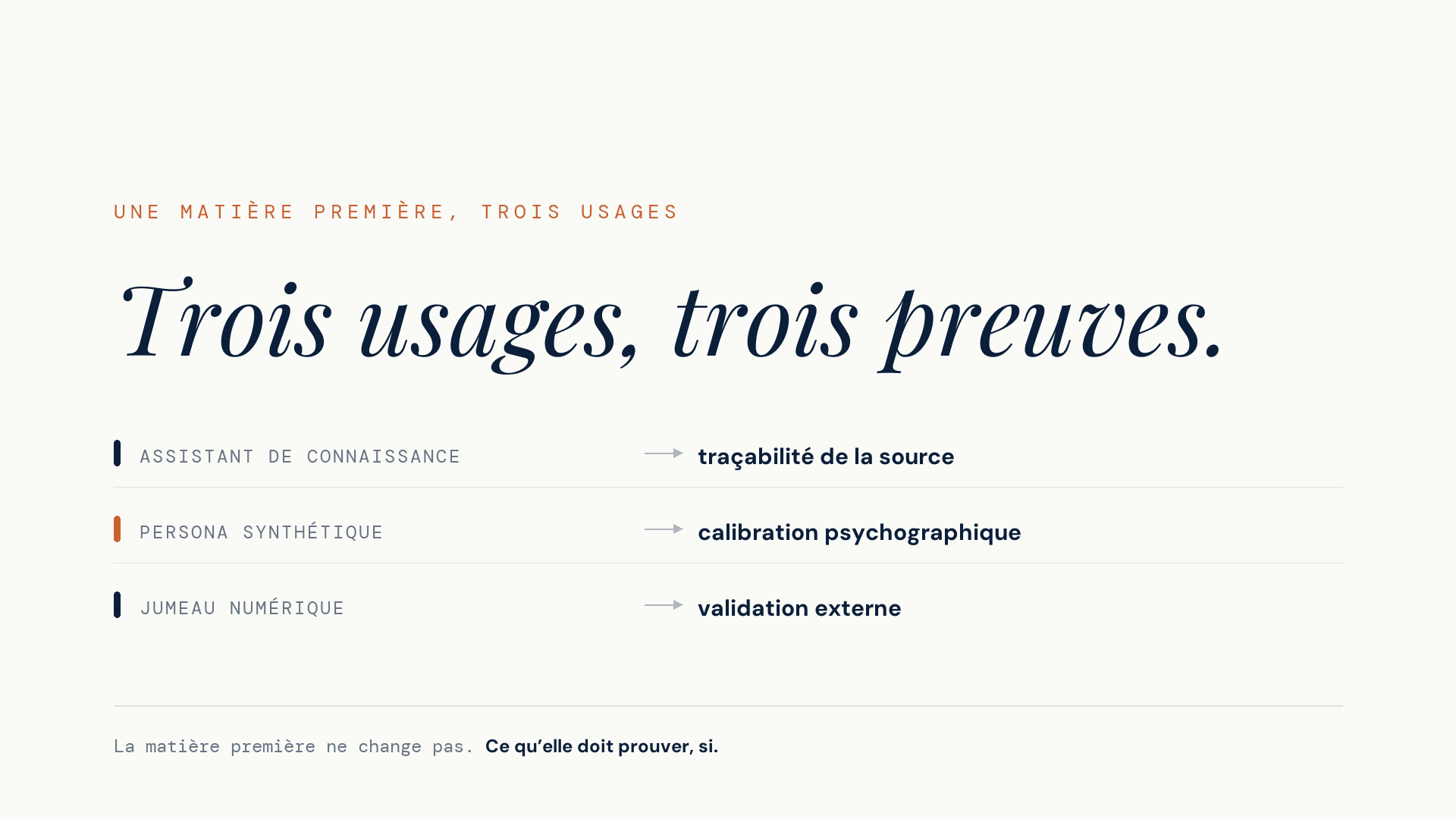
Données synthétiques pour les études marketing : une matière première, trois usages
Assistant de connaissance, persona synthétique ou jumeau numérique : la même base peut nourrir ces trois usages, à condition de ne pas confondre restitution, simulation et prédiction.
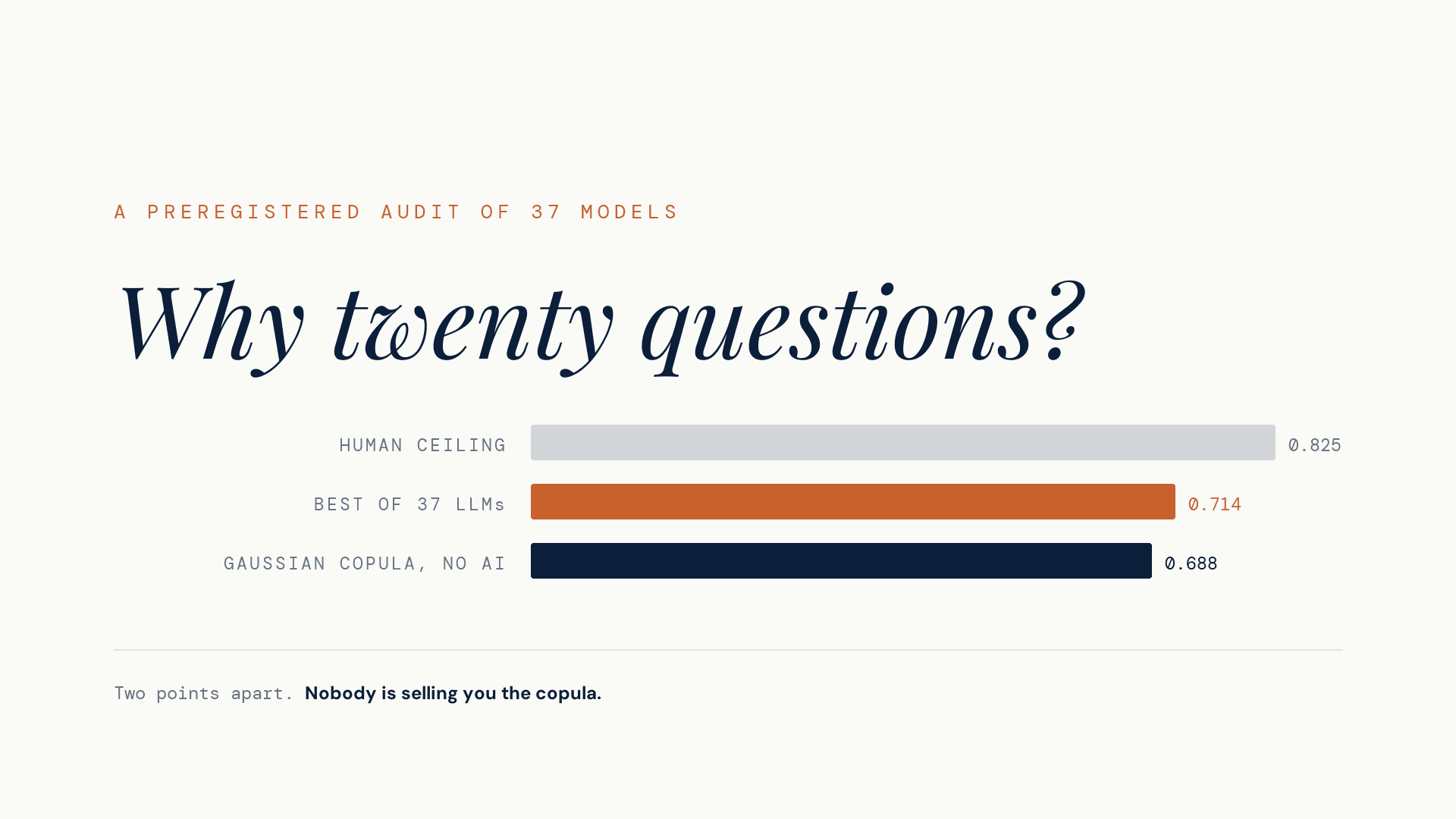
Why ESOMAR Asks Twenty Questions
In a preregistered audit of 37 language models, a Gaussian copula with no AI in it scored 0.688 against the best model's 0.714 — both far below what humans manage with each other. No demo would have shown you that. That gap is the whole reason a buyer needs a questionnaire rather than a presentation.
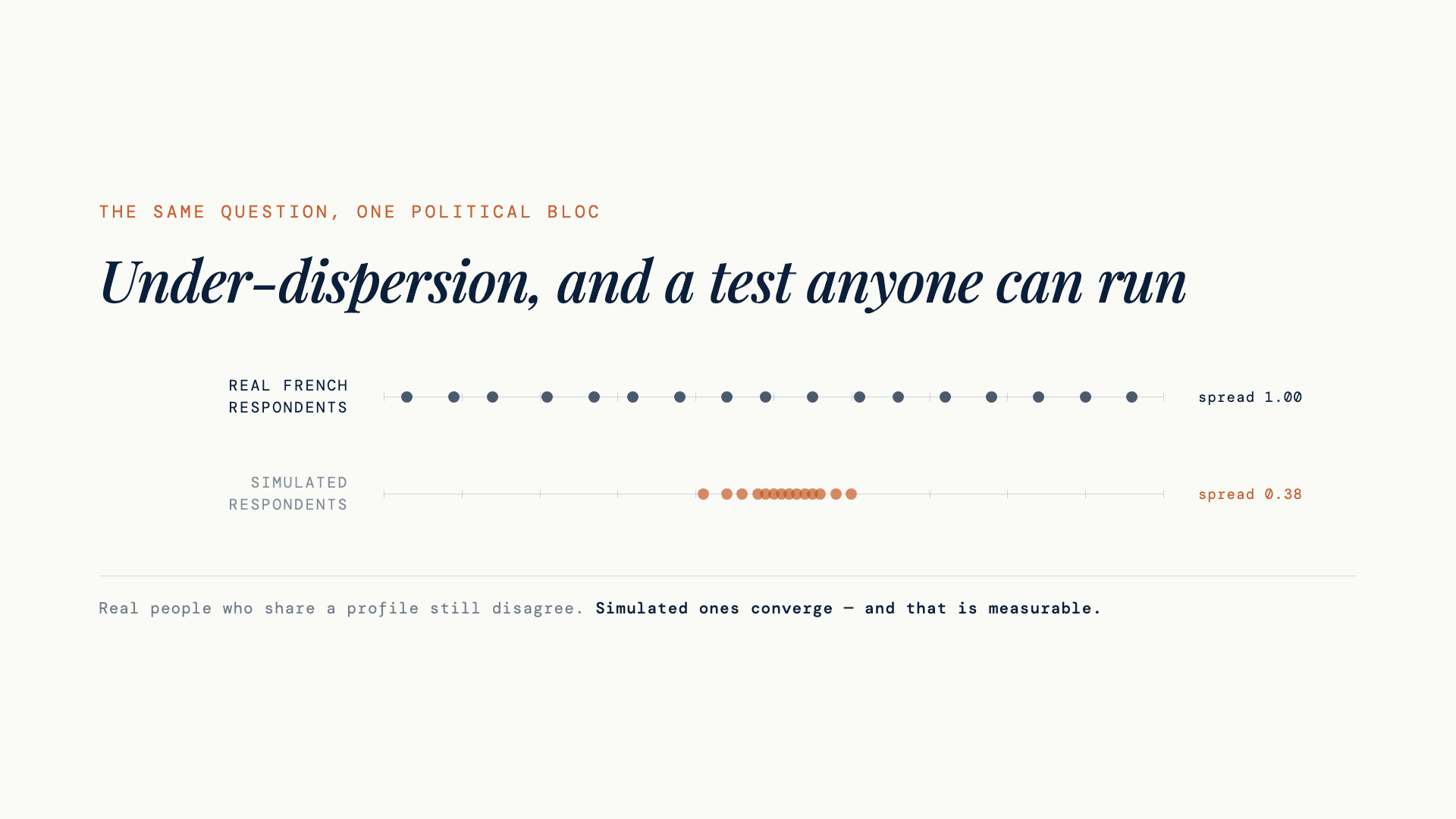
Under-dispersion, and a test anyone can run
In our answers to ESOMAR's 20 Questions we committed to publishing what we found on domain fine-tuned models, either way. Here is the result — and, more usefully, the method that produced it. It runs on published data, costs nothing, and scores our own work unflatteringly in places.
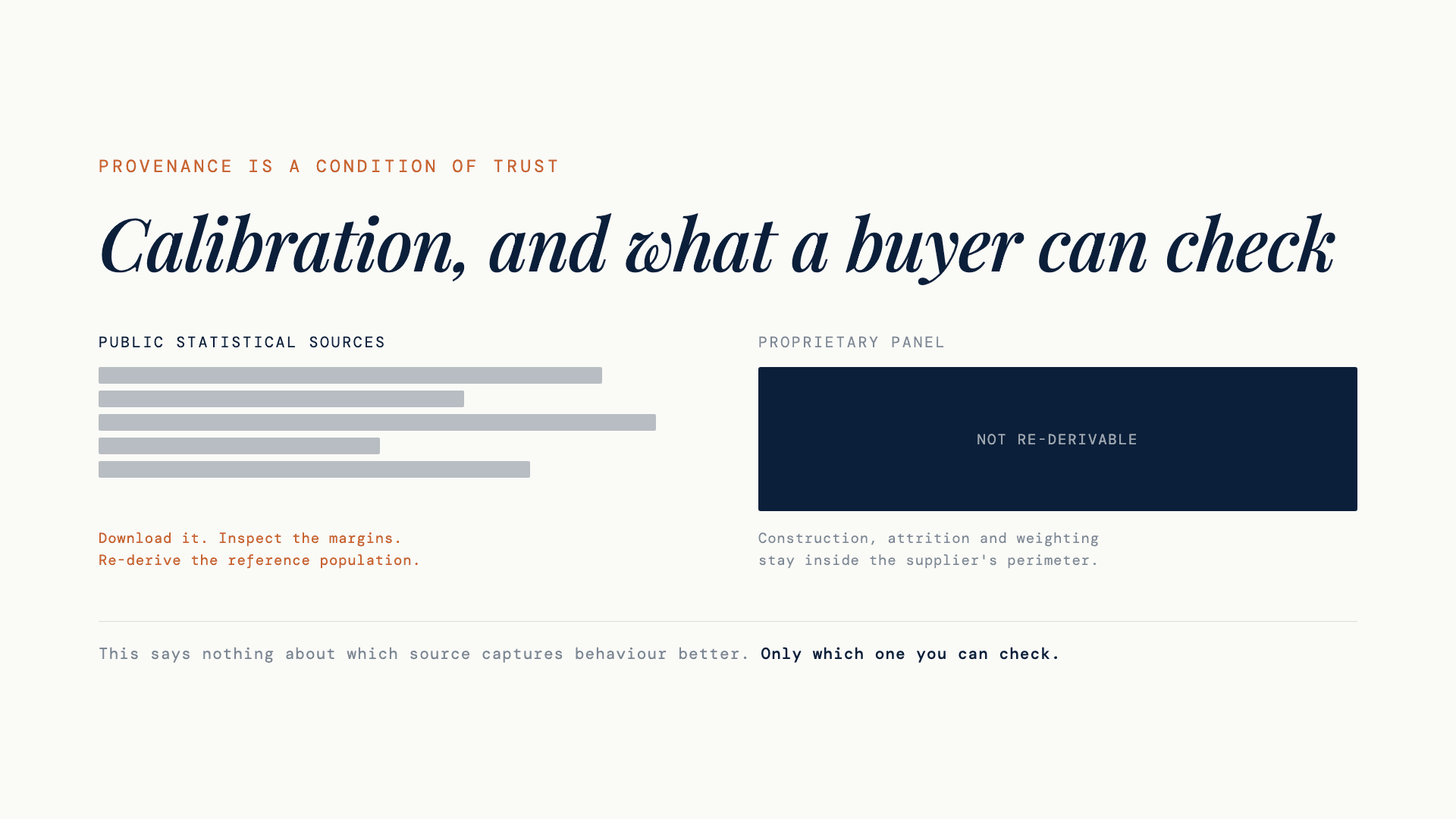
Calibration, and what a buyer can check
A commentary priced the calibration layer at $2 billion. ESOMAR's own figures say 8% of research leaders consider synthetic data reliable enough for a business decision. This note argues that calibration does not require a private panel — and reports what we found when we audited our own claims against ESOMAR's 20 Questions, including three we were making publicly that were not true.
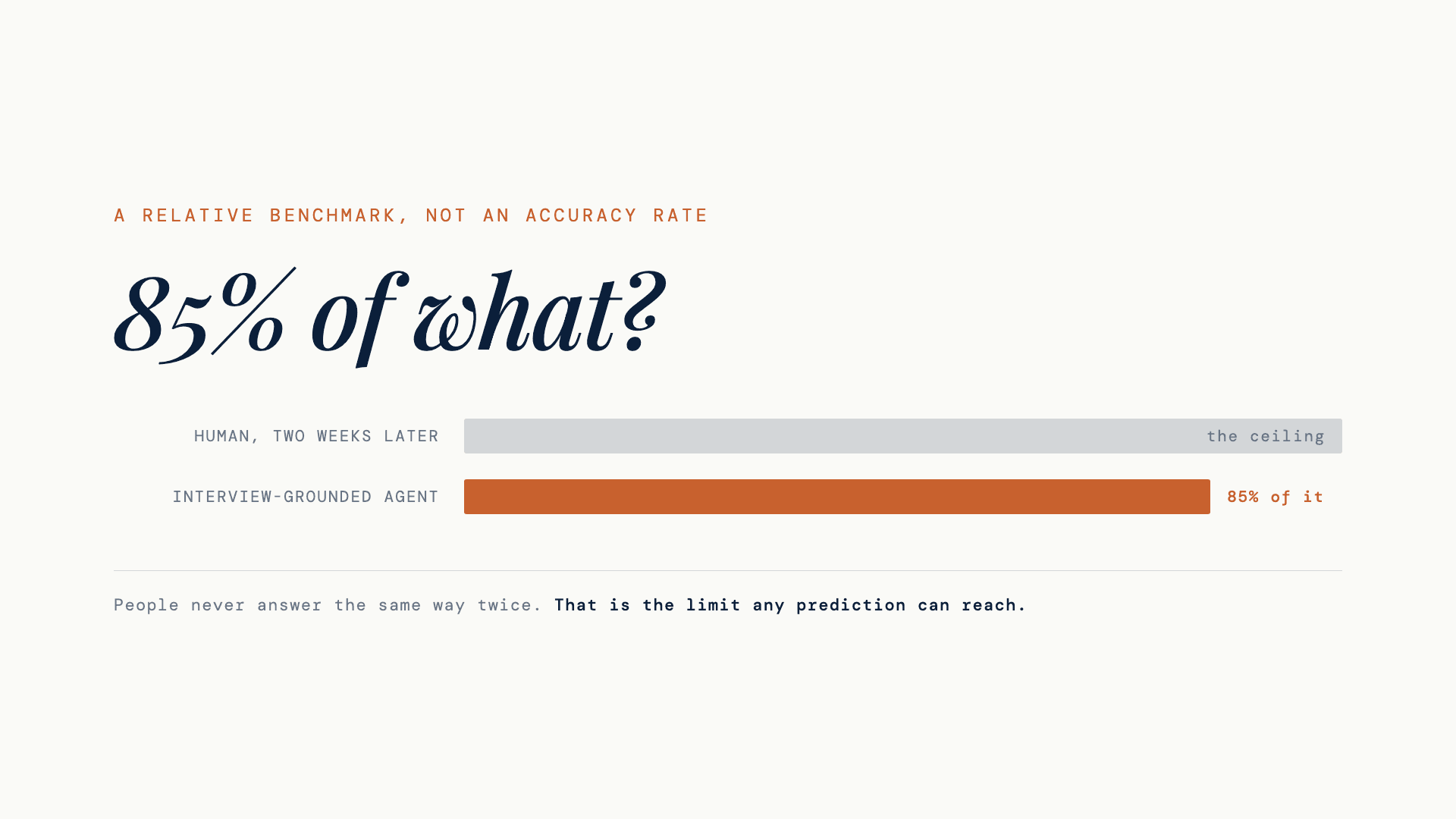
85% of What? The Number the Synthetic-Research Market Keeps Getting Wrong
One figure has become the industry's shorthand for “synthetic respondents work”: 85%. It comes from a serious study, and it does not mean what the market has made it mean. It is not 85% accuracy — it is 85% of the consistency people manage with themselves. That distinction changes what you can reasonably buy.
What Is a Synthetic Panel? A Reference Guide to Synthetic Respondents and the Fifth Generation of Market Research
A reference guide to synthetic panels: what they are, how synthetic respondents are actually built, what the industry is really doing, what the science says, and where they create decision-grade value — framed as the fifth generation of market research.

The Fake AI Monet, and Why Your Synthetic Persona Will Get the Same Treatment
A viral hoax — a real Monet passed off as AI-generated and torn apart by online critics — quietly replicates twenty years of psychology research. The same bias is now distorting the synthetic-research debate. The real question is not 'is it human or synthetic?' The real question is: does it help you decide?